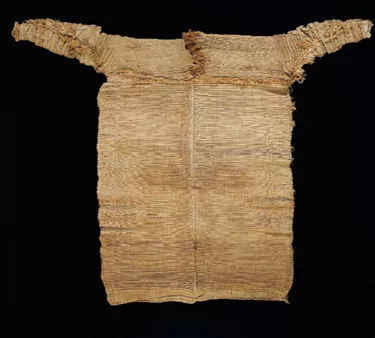
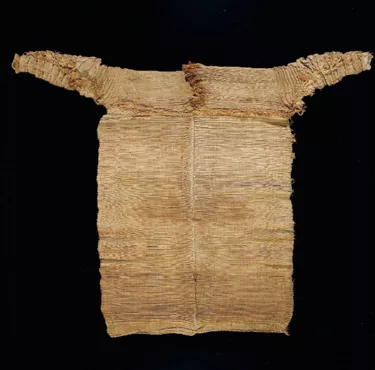
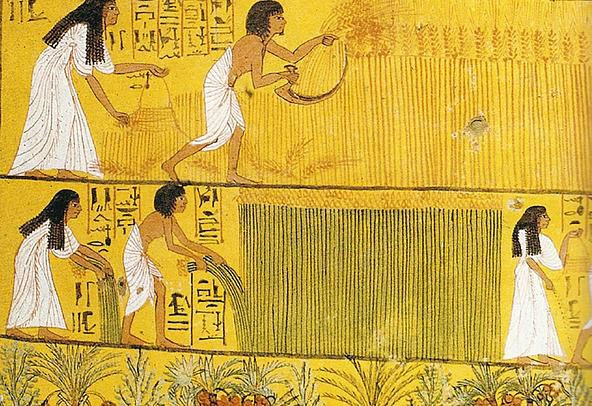
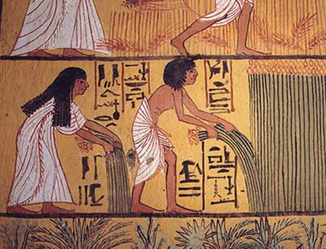
Flax was a cornerstone of environmental sustainability in ancient Egyptian civilization, representing an integrated system built on respect for nature rather than its exploitation. Its cultivation relied on the natural cycles of the Nile, benefiting from the annual flood that renewed soil fertility without chemical fertilizers or intensive irrigation. This delicate balance enabled continuous production while preserving land and water resources for future generations.
Through flax, ancient Egyptians practiced an advanced form of circular economy thousands of years before the concept existed. Every part of the plant was fully utilized—fibers for textiles, seeds for oil extraction, and by-products for various industrial and daily uses. This holistic approach minimized waste and environmental impact, creating a clean and sustainable production system that reflected remarkable ecological awareness for its time.
Flax was therefore far more than an agricultural crop or textile fiber; it embodied a civilizational philosophy rooted in harmony between humanity and the environment. Today, as the world confronts growing environmental challenges, the legacy of ancient Egyptian flax reminds us that true sustainability is not a modern invention, but a timeless principle deeply embedded in human history.